STIX workshop
DIAS Burlington Road
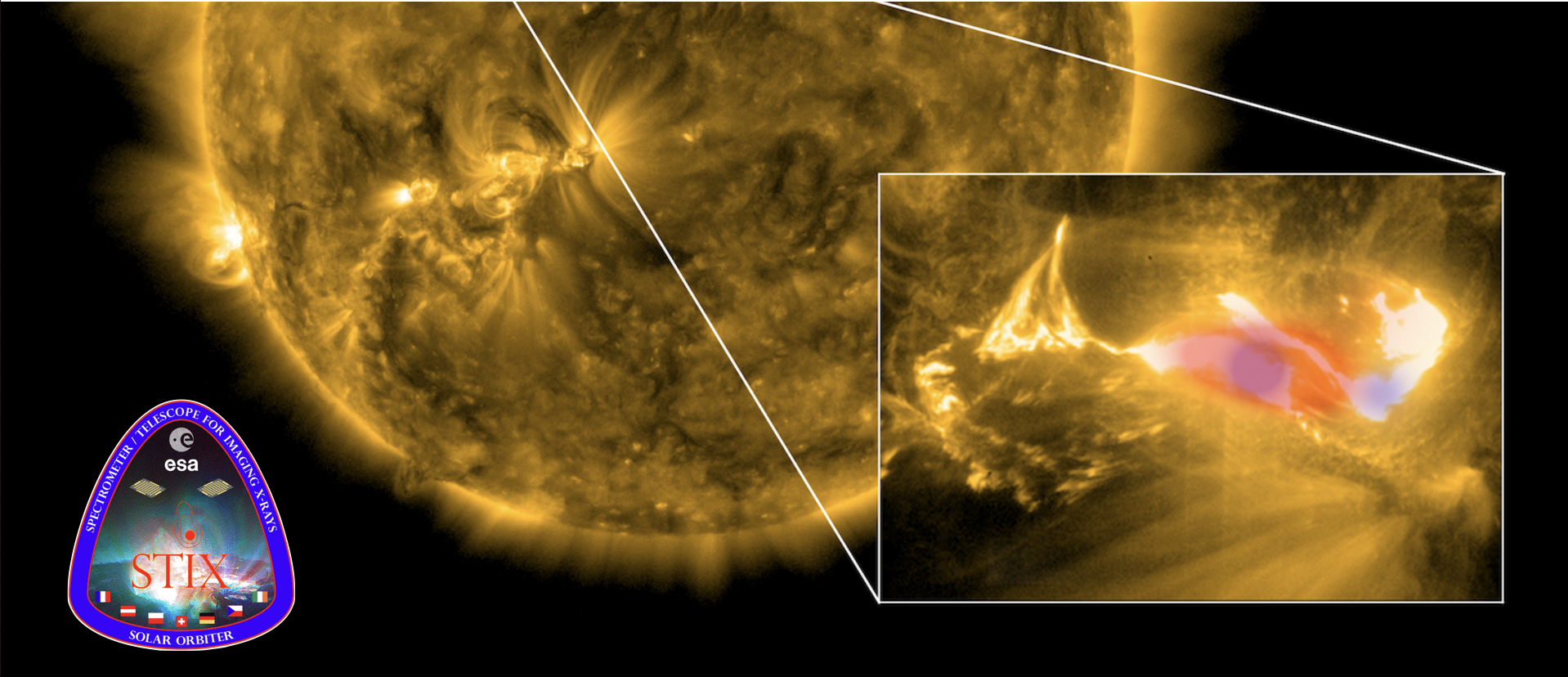
The STIX Team Meeting 2026 will take place in Dublin, bringing together members of the STIX collaboration to discuss recent results, ongoing work, future plans, and the current status of the instrument.
The meeting also welcomes researchers beyond the core STIX team who are interested in STIX observations or solar flare science more broadly. It will bring together scientists working on the analysis of STIX data, and is open to the wider Solar Orbiter community. A dedicated “STIX Friends” session will focus on combined observations with other instruments, as well as related modelling and theory.
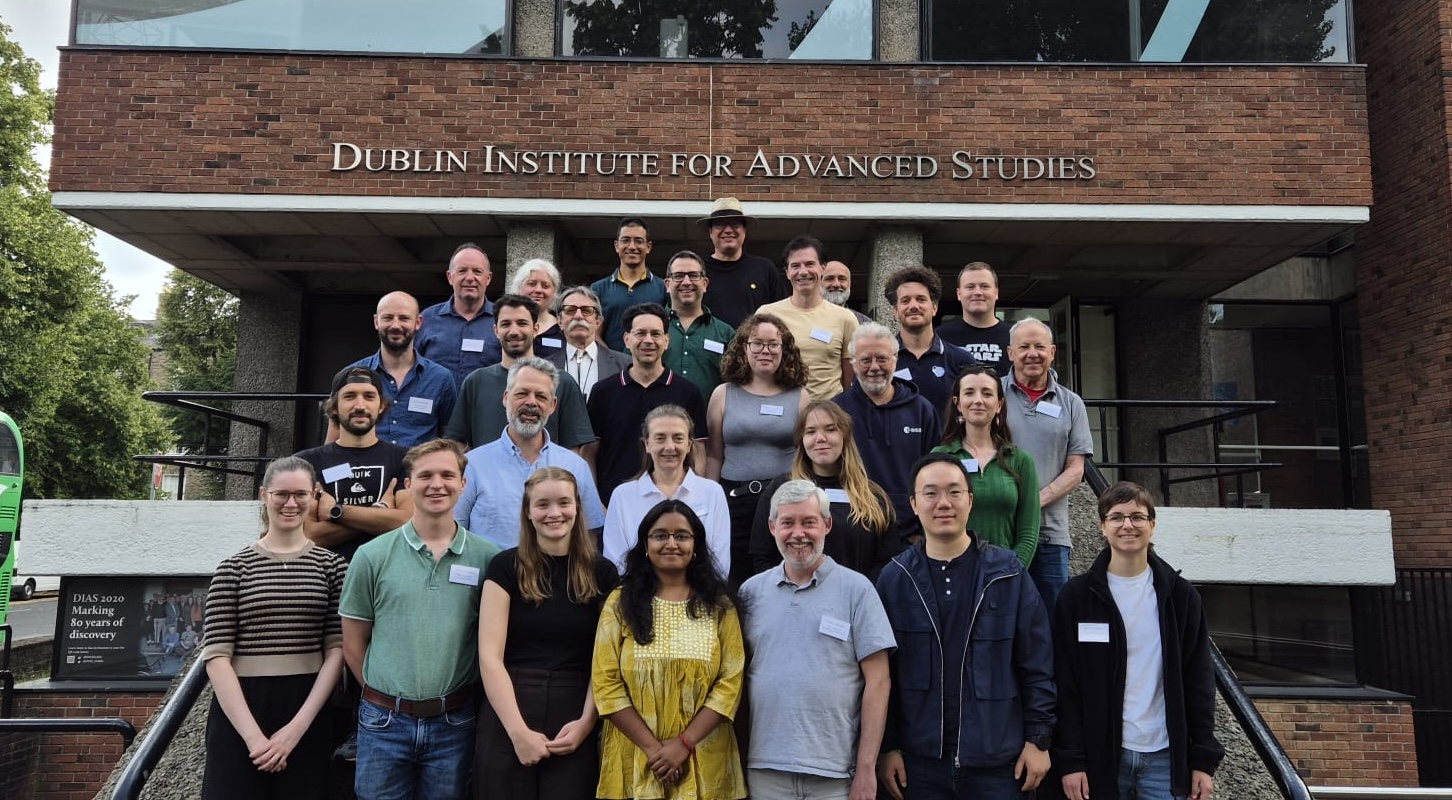
The main meeting will run from Wed-Fri 22–24 July, hosted by the Dublin Institute for Advanced Studies (DIAS), and will take place at the DIAS central building located at 10 Burlington Rd, Dublin, D04 C932.
Instrument team discussions and focused working sessions are planned for 21 July, ahead of the main meeting. These will provide time for more detailed coordination, technical discussions, and collaborative work in a smaller group setting.
-
-
09:00
Arrival and registration
-
Session 1: STIX general status
- 1
-
2
STIX detector status
After more than 6 years in flight and 100k+ flare events registered, the STIX detectors are in a good shape even though they tend to degrade overtime.
In this presentation, I will report on the detector status, calibration monitoring with a specific attention on the detector depolarization phases when the scientific analysis requires some precautions.Speaker: Olivier Limousin (CEA Saclay, DRF/IRFU/Astrophysics Division) -
3
STIX data calibration: update and future work
In this talk we will describe the recent development of the Energy LookUp Table (ELUT) correction based on new daily calibration fits files. We will quantify the improvements obtained with this correction and show the implementation within the STIX ground software. Finally, we will provide an update on the data calibration for imaging and spectroscopy, and we will discuss the next steps.
Speaker: Paolo Massa (University of Applied Sciences and Arts Northwestern Switzerland (FHNW)) -
4
DiscussionSpeaker: All .
-
10:30
Coffee
-
Session 2: STIX software, aspect, imaging
-
5
STIX software update + demoSpeaker: Shane Maloney (Dublin Institute for Advanced Studies)
- 6
-
7
Imaging compact sources with fine-resolution sub-collimators
We utilized relative visibility amplitudes to identify approximately 40 compact flares in the energy range 10–15 keV recorded between 2022 and 2025. We utilized this dataset to improve the visibility phase calibration for the 6 fine-resolution sub-collimators. In this talk, we will describe the calibration procedure we have performed.
Speaker: Agnieszka Kopacz (University of Wrocław)
-
5
-
12:30
Lunch
-
Session 3: Solar Orbiter Major Flare Campaigns and EUI/HRI studies
-
8
An overview of the Solar Orbiter Major Flare CampaignsSpeaker: Laura Hayes (Dublin Institute for Advanced Studies)
-
9
Variations in Energy Transport during Flares
Solar Orbiter major flare campaigns provide, for the first time, high-resolution unsaturated EUV imaging (EUI) together with X-ray spectroscopic imaging (STIX). Fine structures in flare ribbons are observed on previously inaccessible scales (0.1Mm on 2s cadence), and provide an opportunity to test the standard idea of non-thermal electron beams driving energy transport in flares. We performed a flare case study where there were two groups of kernels, and one group of riblets (extended EUV ribbon fine structures typically observed near the solar limb). We found co-spatial locations between the EUV kernels and the non-thermal X-rays, imaged using the spectral component imaging technique. The riblets were not co-spatial with the X-rays. Only the brightest group of kernels shows strong emission immediately following the initial HXR burst, whereas the riblets and second group of kernels appear to respond weakly to the later pulsations. The lack of spatial and temporal correlation between the hard X-rays and the weaker EUV fine structure challenges the idea that all footpoint emission in flares is driven by non-thermal electron beams.
Speaker: Rachel Hubbard (Mullard Space Science Laboratory) -
10
Constraining Flare Simulation Inputs with STIX and EUI
Solar flare simulations are often driven by electron beam parameters inferred from X-ray observations. One important input is the electron beam flux, which depends on both the non-thermal power and the assumed flare footpoint area. In this work, we compare footpoint areas estimated from STIX X-ray imaging with those measured from higher-resolution EUI observations for a Solar Orbiter flare. While STIX provides the spectral information needed to estimate the non-thermal electron power, EUI allows the flare footpoints to be constrained on smaller spatial scales. Using EUI imaging, we find footpoint areas of more than one order of magnitude smaller than values often assumed in previous flare simulations. These smaller areas lead to larger electron beam fluxes when used as inputs for RADYN simulations. We compare simulations driven by different footpoint area assumptions and examine how the resulting atmosphere changes. To connect the models back to observations, we synthesize Fe IX and Fe X emission from the RADYN outputs and compare the modeled EUV response to the EUI flare evolution.
Speaker: Madison Liebel -
11
First statistical results from the Solar Orbiter flare campaign
After more than two years of chasing solar flares with the EUI/HRI, we have established a catalogue of about 50 solar flares with 174A images at a few second time cadence. Single event studies have shown that there is a very close temporal link between the EUV and HXR flux from flare ribbons during the impulsive phase. This correlation holds for all of the 10 M-class flares revealing a linear dependance between the HXR and EUV fluxes. The linear dependance suggest that the ribbon emissions are becoming fainter and fainter for smaller and smaller flares and eventually will not be a significant contributor to the total EUV flare enhancement. For the workshop, we plan to investigate how smaller flares fit within the correlation derived from M-class flares.
Speaker: Samuel Krucker
-
8
-
15:30
Coffee
-
Session 4: Particle acceleration and nonthermal diagnostics
-
12
From C-class to X-class: investigating efficient particle acceleration in Fermi/LAT gamma-ray solar flares
We present solar flares with gamma-ray emission observed by Fermi/LAT to investigate efficient particle acceleration during magnetic reconnection. We analyze these events using Fermi/LAT data combined with imaging in HXRs (Solar Orbiter/STIX and ASO-S/HXI), EUV (SDO/AIA), and white light (SDO/HMI and ASO-S/WST). First, we report the smallest Fermi/LAT solar flare to date, which is the first observation of >100 MeV emission from a GOES C-class flare. Emission at these energies is unusual for a C-class event. Second, we present a few X-class flares, where we study the temporal evolution of the WST white-light emission sources and compare them with Fermi/LAT observations to investigate the protons precipitation sites.
Speaker: Andrea F. Battaglia (IRSOL) -
13
Non-thermal emission in failed filament eruptions
Solar flare hard X-ray (HXR) emission is conventionally interpreted within a thin-target / thick-target dichotomy, corresponding to coronal looptop and chromospheric footpoint sources respectively. Solar filaments, with characteristic densities of 10e10–10e11cme−3, occupy an intermediate density regime that fits neither limit. Motivated by this gap, we examine two failed filament eruptions in which Solar Orbiter/STIX reveals non-thermal coronal HXR emission spatially associated with the confined filament: (i) the partially-occulted event of 2022 May 3, in which the STIX peak occurs during the deceleration—rather than the initiation—phase of the rising filament; and (ii) the 2024 September 30 event, observed jointly by STIX and EUI/HRI at 2-second cadence, allowing fine-scale comparison between the HXR sources and the filament structure. We discuss the possibility that the filament itself acts as a "hybrid-target" bremsstrahlung emitter—neither cleanly thin nor cleanly thick—and outline the imaging-spectroscopy diagnostics required to test this picture, including footpoint–filament spectral index contrasts and inferred target column densities.
Speaker: Song Tan (Leibniz Institute for Astrophysics Potsdam (AIP)) -
14
HXR observations at flux rope anchor points evidenced by magnetic field extrapolations
We present recent results on the X9-class flare on October 3rd 2024. STIX analysis shows the existence of multiple HXR sources during the impulsive phase of the flare. Combining HXR analysis with other wavelength observations, coronal dimming studies, and magnetic field extrapolations, we provide strong observational evidence that the outer HXR sources originate from the anchor points of an erupting flux rope, supporting the observations reported in Stiefel et al. (2023).
Speaker: Muriel Zoë Stiefel (FHNW & ETHZ) -
15
Search for signatures of nonthermal collisions in optical spectropolarimetry: combined STIX and IRSOL/ZIMPOL flare observations
The existence of linear polarization due to the impact of flare-accelerated particles with the lower atmosphere, known as impact polarization, has been a long-debated question. Although theories predict this phenomenon, convincing observational evidence has remained elusive. In the past, the H-alpha line has been used to search for impact polarization, but no convincing signature has been found (Bianda et al., 2005). We plan to revive this discussion through a combined set of flare observations with STIX and IRSOL/ZIMPOL, in the wavelength range that includes the He I D3 line at 587.6 nm and the Na I D1 and D2 lines at 589.6 nm and 589.0 nm, respectively. The He I D3 line, in particular, is a promising candidate to being sensitive to flare-accelerated particles because it forms in the upper chromosphere and it goes into emission at particle precipitation sites, such as optical continuum enhancements (e.g., Battaglia & Krucker, 2025).
Speaker: Andrea F. Battaglia (IRSOL)
-
12
-
09:00
-
-
Session 5: Large-sample STIX analysis and X-ray diagnostics
-
16
X-ray data analysis in the framework of the SOLER project
In the framework of the Horizon Europe project SOLER (Energetic Solar Eruptions: Data and Analysis Tools) we are leading the work package on X-ray data analysis. I will discuss some of our results as well as work in progress. This will include (1) STIX spectroscopy for all >M5 flares of the current solar cycle, (2) STIX timeseries analysis of a larger sample of flares using Gaussian decomposition, (3) joint spectral fitting of STIX and XSM data, and (4) a case study of an eruptive event using a range of tools developed by the SOLER team.
Speaker: Alexander Warmuth (Leibniz Institute for Astrophysics Potsdam (AIP)) -
17
A spectral analysis of a large sample of >M5 STIX flares using an automated Python based pipeline
Using Sunkit-spex alongside STIXpy, it is now possible, for the first time, to carry out a complete Python based STIX spectroscopic analysis. We present preliminary results of the spectral analysis of a sample of >M5 GOES class flares from the current solar cycle as observed by STIX. We use an automated fitting pipeline to constrain the evolution of key thermal and non-thermal parameters, thereby providing insights into the physics of the flaring process for a large number of STIX flares.
Speaker: Jake Mitchell (Leibniz Institute for Astrophysics Potsdam (AIP)) -
18
The energy-altitude relation anomalies in solar flares: statistical results and the role of chromospheric density variations
Recent observations by the Spectrometer/Telescope for Imaging X-rays (STIX) onboard Solar Orbiter have revealed deviations from the classical energy-altitude relation of hard X-ray (HXR) footpoint sources in solar flares. While the standard thick-target model predicts monotonic decrease of source height with increasing energy, STIX observations show non-monotonic features, including local maxima in source height as a function of energy.
We present results of a statistical study of HXR source heights based on a sample of solar flares observed by STIX. We investigate the occurrence, characteristic energies, densities, and heights of the observed anomalies and explore their possible physical origin.
To support the interpretation of the observation, we employ a numerical thick-target model describing the collisional transport of non-thermal electrons injected from the corona into the chromosphere. Preliminary simulations indicate that variations in the chromospheric density structure can modify the resulting energy-altitude relation.
Speaker: Katarzyna Mikuła (Space Research Centre, Polish Academy of Sciences)
-
16
-
10:30
Coffee
-
Session 6: Magnetic context, active regions, and flare productivity
-
19
Activity nests as prolific flare factory: from solar minimum to maximum
Magnetic activity varies over the solar cycle and is not uniformly distributed across the Sun’s surface. Areas on the Sun with recurring flux emergence are called active region nests and show structure in
longitude. These nests are thought to form due to non-axisymmetries in the generation and storage of the Sun's dynamo magnetic field. The nesting of magnetic activity is also observed on other Sun-like stars, suggesting that it is a fundamental process related to dynamo magnetic fields. However, our ability to study the long-term evolution and activity of solar active region nests is limited by their visibility from Earth. With ESA's Solar Orbiter periodically observing the Sun's far-side (akin to the STEREO-AB era), active region nests can now
be studied in greater detail and over timescales of several solar rotations. Joint-observations of active region nests from the current solar cycle have shown that they produce more complex active regions (Hale classifications) with a higher occurrence rate of solar flares. Nested flux emergence also reinforces self-similar magnetic field topologies in the solar corona by anchoring the heliospheric current sheet, that can be leveraged when predicting the magnetic connectivity
of spacecraft. We will present new results on NLFFF reconstruction carried out for an active nest that persisted during 2022 (Finley et al. 2025, Blaise et al. submitted) and present a subsequent study of actives nests for 2024, during solar maximum (Finley et al., submitted).Speaker: Antoine Strugarek -
20
Investigating the repeated occurrence of hard microflares in AR 13141
In this work, we investigate the recurrent flaring activity observed by STIX from AR 13141, visible on disk in November 2022. Surprisingly, it produced more than 50 hard microflares, which are flare events rooted in a sunspot with a flat electron spectrum. Notably, all events originated from the same structure within the sunspot. In this presentation, we show the comparison between events rooted in this structure with events not rooted in it and discuss what may be at the origin of the flat electron spectra observed in hard microflares.
Speaker: Andrea F. Battaglia (IRSOL) -
21
Influence of Flare Iron Abundance Variations on GOES XRS Data Interpretation
Recent studies of coronal active regions and flare composition—particularly the
interpretation of STIX spectra using TEMIRA—indicate substantial variations in
iron abundance during flares. Consequently, these variations influence plasma
emissivities as observed in the two standard channels of GOES X-ray sensors
(XRS): the 0.5–4 Å (high-energy, H) and 1–8 Å (low-energy, L) bands. The
standard interpretation of XRS H and L bands relies on an isothermal assumption,
providing the average temperature (Tg) and emission measure (EMg) of the plasma
contributing to the bands' emission. The SolarSoft "goes" package allows the
determination of (Tg) and (EMg) values from momentarily observed H and L fluxes
using two plasma abundance models: coronal-extended (Feldman et al., 1992) and
photospheric (Grevesse N., Sauval A.J., 1998). We first demonstrate how the
assumed abundance model influences the temperature dependence of the
"contribution functions" calculated for the H and L channels, and we discuss the
respective differences in the derived Tg and EMg values. Next, we recalculate
the contribution functions using modern CHIANTI spectra (version 11.0.3 with
Giulio Del Zanna's modifications) for these two abundance models and discuss the
consistency of the results. Since TEMIRA results indicate a large variation in
Fe abundance (ranging from 7.4 to 9.0) between flares, as well as substantial
changes during individual flares, we investigated the respective variation in
GOES XRS emissivities across this wide range of Fe abundances. We show that to
obtain more physically meaningful average values for Tg and EMg, one must use
appropriate, momentary Fe abundances, A(Fe) (such as those obtained from
TEMIRA); otherwise, the results are substantially biased.Speaker: Janusz Sylwester (Space Research Centre, Polish Academy of Sciences, Solar Physics Division)
-
19
-
12:30
Lunch
-
Session 7: MeDDEA, PADRE, and multi-viewpoint HXR observations
-
22
Hard X-ray solar flare observations by the Measuring Directivity to Determine Electron Anisotropy (MeDDEA) instrument on the PADRE CubeSat Observatory
Solar flares are known to efficiently accelerate particles to high energies, yet the underlying acceleration mechanism remains poorly understood. Jeffrey et al. (2024) have shown that stereoscopic observations of hard X-rays can constrain the angular distribution of accelerated electrons and provide important new information on the acceleration mechanism in solar flares. The Spectrometer/Telescope for Imaging X-rays (STIX) on board Solar Orbiter enables stereoscopic x-rays observations as it observes the Sun from different viewing angles than Earth. The solar PolArization and Directivity X-Ray Experiment (PADRE) is a NASA CubeSat mission that launched on June 23rd 2025 into low-earth orbit. Its science goal is to determine the degree of beaming of accelerated electrons in large solar flares. It hosts two instruments, one of which is the Measuring Directivity to Determine Anisotropy (MeDDEA) instrument which includes four Solar Orbiter/STIX spare detectors to enable cross-calibrated stereoscopic measurement of x-rays from solar flares from 5 to 100 keV. We present on the details of the design of the MeDDEA instrument, its status, provide an overview of the x-ray observations so far, and state of the software analysis tools.
Speaker: Olivier Limousin (CEA Saclay, DRF/IRFU/Astrophysics Division) -
23
Observing a solar flare from two perspectives: First MeDDEA–STIX results
The MeDDEA instrument aboard the CubeSat PADRE employs the same detector technology as STIX on Solar Orbiter, but operates from Earth orbit. This configuration enables unique multi-perspective observations of solar flares, allowing direct comparisons between measurements obtained from different viewing angles.
In this talk, we present the first solar flare observations recorded by MeDDEA. We focus on an M5-class flare that was observed ondisk by MeDDEA while being occulted for STIX. This provides a unique opportunity to compare hard X-ray spectra from the flare itself with those associated with the escaping CME from the same event.
Speaker: Muriel Zoë Stiefel -
24
Joint STIX and HXI Observations of Solar Flares and Analysis of Behind-the-Limb Flares
We present a catalogue of joint solar flare observations obtained by the STIX and HXI instruments, currently containing more than 1,000 events. Within this catalogue, we identified a subset of flares that appear behind the solar limb for one of the instruments. Along with the catalogue, we will present a case study demonstrating the analysis of a selected multisourced behind-the-limb flare observed jointly by STIX and HXI.
Speaker: Karol Kułaga (Space Research Centre, Polish Academy of Sciences) -
25
CEA LDE3 statistical study of STIX flares from 2024 data
The CEA LDE3 STIX group is developing tools for flares’ statistical studies. These include allowing a flare’s selection using various criteria, such as energy bins, detector’s pixels, peak intensity. The resulting catalogue can be used for the analysis of the temporal evolution of the high and low-energy location emission within the active region of interest and of the hardness of the energy spectrum.
We will present preliminary results of the use of such tools, on data from one AR observed for several solar rotations in 2024Speaker: Susanna Parenti (CEA DAp Université Paris-Saclay, Université Paris Cité, CNRS)
-
22
-
15:30
Coffee
-
Session 8: Flare catalogues, statistics, and data products
-
26
Statistical analysis of STIX flare time profiles
My summer internship at DIAS focuses on the statistical analysis of STIX-observed solar flare time profiles in the hard X-ray. I will present my findings with a focus on the largest flares of the current solar cycle, including characteristics such as overall flare duration
In hard X-ray energies, rise and decay times, peak flux, and the occurrence of multiple peaks. This basis will facilitate future exploration of time variations in flare X-ray profiles, particularly Quasi-Period Pulsations (QPPs).Speaker: Dearbhail O'Mahony -
27
Preparing the second data release of CoSEE-Cat
The Comprehensive Solar Energetic Electron event Catalogue (CoSEE-Cat) is a living database of energetic particle events detected with Solar Orbiter. This catalogue compiles measurements from eight remote-sensing and in-situ instruments. A first sample of 300 events that occurred until the end of 2022 was released last year. We are now preparing the second data release, which will contain more than 500 events covering 2020 to 2023. I will present updated statistics and briefly describe ongoing follow-up studies. Finally, I will open the discussion to let you make suggestions for any addition or improvement to the online catalogue.
Speaker: Frederic Schuller (AIP Potsdam, Germany) - 28
-
29
Discussion: STIX flare catalogues, Solar Orbiter event lists, and shared data productsSpeaker: All .
-
30
Discussion: stereoscopy, directivity, occulted flares, and cross-calibrationSpeaker: All .
-
26
-
19:00
Workshop dinner at Searsons Searsons Bar
Searsons Bar
searsonsbar.ie
-
-
-
Session 9: Eruptions, radio emission, and SEP-producing events
-
31
The 18 January 2026 eruption and its severe solar energetic particle event
On 18 January 2026, the active region 4341 produced a long-duration X1.9 flare, a fast halo coronal mass ejection (CME) with a projected speed above 2000 km/s, and one of the largest >10 MeV proton enhancements in the GOES record (S4). In SolO/STIX, the flare shows a clear train of quasi-periodic pulsations (QPPs) in the non-thermal hard X-rays, pointing to repeated episodes of electron acceleration during the impulsive phase. From the STIX non-thermal bands (25–84 keV), we measure the pulsation period and track the evolution of the X-ray spectrum from pulse to pulse, then test whether the same pattern appears in the EOVSA microwaves and the OVRO-LWA low-frequency radio data. SDO/AIA and HMI provide the EUV and magnetic context, SOHO/LASCO and STEREO-A/COR2 reconstruct the CME, and the type II burst traces the CME-driven shock. SolO/EPD provides in situ electron and ion spectra of escaping particles, while at 1 AU, GOES monitors protons and the arriving CME and its shock, which drove a G4-severe geomagnetic storm. By tying the QPP signal in STIX to the radio, EUV, white-light, and in-situ data, we investigate whether bursty energy release in the corona shapes how and when particles escape, and we weigh the flare and shock contributions to this severe SEP event.
Speaker: Mohamed Nedal (Dublin Institute for Advanced Studies) -
32
Multiwavelength Study of a Complex Solar Eruption on 28 March 2025
Coronal mass ejections (CMEs) are often accompanied by a variety of solar radio emissions, among which moving type IV bursts are particularly interesting. These complex radio bursts are thought to be produced by energetic electrons trapped within expanding CME magnetic structures. Previous studies indicate that both gyrosynchrotron and plasma emission processes may contribute. Investigations of moving type IV bursts can provide valuable insight into the physical properties of CME magnetic structures and the energetic particles they contain.
On 28 March 2025, an X1.1 flare was observed by GOES and was followed by a fast CME with a projected speed of approximately 1986 km s⁻¹. The eruption was associated with the interaction between a rising flux rope and a filament. During this event, a variety of radio emissions were detected by ORFEES and the Nançay Radioheliograph (NRH), including a particularly complex moving type IV burst. Using NRH imaging, we find that the radio emission originated from multiple locations within the interacting flux rope–filament system. The event was also observed by HXI/ASO-S and possibly by STIX aboard the Solar Orbiter. By combining radio, extreme-ultraviolet (EUV), and hard X-ray (HXR) observations, we investigate the origin of the different type IV radio sources and explore the emission mechanisms responsible for their generation.Speaker: Shilpi Bhunia (Observatoire de Paris) -
33
Electron Beams Producing Radio U-BurstsSpeaker: Hamish Reid
-
31
-
11:00
Coffee
-
Session 10: Open questions in high-energy solar flare physics
-
34
Open Discussion
Participants briefly present open problems, puzzles, or analysis challenges.
Themes: where and how particles are accelerated; what links EUV ribbons, HXR and energy transport; events where thin/thick-target assumptions break down; multi-viewpoint directivity and occulted flares; uncertainties in STIX spectroscopy, imaging, calibration and albedo; priority campaign case studies; most valuable catalogue/statistical studies.
Aim: identify open problems, connect people working on related topics, and define collaborative studies or paper leads.
Speaker: All .
-
34
-
12:30
Lunch
-
Session 11: Next steps and wrap-up
-
35
Next steps with STIX (and SPARK), workshop wrap-up and action planning.Speaker: All .
-
35
-